
Tables and databases
Relational databases and CSV. Records, fields and relationships to align.
The software behind payment infrastructure.
Payment acceptance built around your business.
Building and developing digital products.
Hosting and supporting your IT systems.
From computer vision to predictive analytics.
Data and technology for urban environments.
We transform diverse data into a consistent structure, combining sources, identifying key fields and preparing information for analysis and your systems.

Review structure, volume and access rules, then select processing for each source.
Relational databases and CSV. Records, fields and relationships to align.
Events and data from different services, whose structures may vary.
PDFs, text documents and email. Extract required fields under agreed rules.
Images, video and audio. Use metadata and, where required, specialised content processing.
Select a source. This illustrative example shows source values mapped to a common schema.
item_id; title; state
DEMO-01; Module A; ready
DEMO-02; Module B; hold
| ID | Name | Status |
|---|---|---|
| DEMO-01 | Module A | Ready |
| DEMO-02 | Module B | Validation |
{"id":"DEMO-01", "status":"ok"}
<record key="DEMO-02" state="pending"/>
| ID | Source | Status |
|---|---|---|
| DEMO-01 | JSON | Ready |
| DEMO-02 | XML | Validation |
Document: DEMO-01
Item: Module A
Status: ready for processing
| ID | Item | Status |
|---|---|---|
| DEMO-01 | Module A | Ready |
demo-video.mp4 · frame 00:12
demo-image.png · object A
| Type | Time | Event |
|---|---|---|
| Video | 00:12 | Object A |
| Image | — | Object A |
Preserve source data meaning and agree transformation rules before automation.
Convert data into agreed structures and types.
Map equivalent fields and align source keys.
Identify the data that matters for your task.
Present results clearly for review and analysis.
Outputs are defined for the project: prepare a dataset or build repeatable processing.
Names, types, values and interpretation rules.
How source fields and statuses relate to the common schema.
Combined data in a format suitable for your system or analysis.
Clear presentation, quality reporting and identified ambiguities.
Renaming fields is not enough. We check that data remains comparable and useful.
Identify missing values, duplicates and format mismatches. Examine values, units and record relationships.
Agree uncertain mappings and exception handling. Missing information is not replaced by guesswork.
Projects involving dataset preparation and information extraction from images.
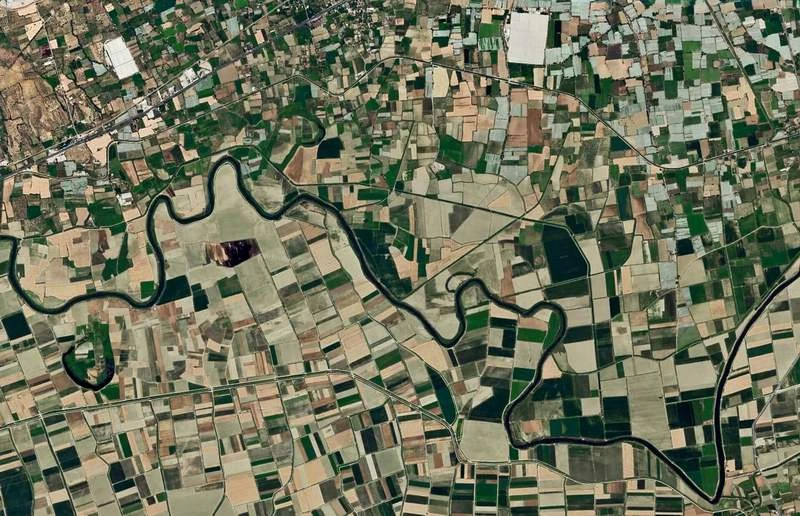
Creating datasets to analyse the Earth's surface.
Read the project
Developing and improving production line marking recognition.
Read the projectA consistent dataset can support forecasting, personalisation and computer vision.
Those relevant to a specific decision. Define the business task, available sources and intended outcome, then select the first stage.
Yes. Extraction scope and methods are defined using samples. Metadata, text and recognition outputs need different methods and quality checks.
We identify them and agree handling rules: exclusion, clarification or another acceptable method. Imputed values are not automatically treated as verified facts.
We can design repeatable processing. Frequency, sources, integration and quality checks are agreed for the process.
Tell us about your sources, formats and the picture you need to build.
Loading the contact form…